
In 2024, the National Science and Technology Council’s (NSTC) Department of Natural Sciences and Sustainable Development launched the Taiwan Marine Observatory System (Tai-MOS) to propel Taiwan’s oceanographic research forward. Together with the Ocean Research Vessel and Core Instrument Center and the Ocean Data Bank, Tai-MOS forms the bedrock of Taiwan’s foundational oceanographic research.
In its inaugural year, Academia Sinica’s Research Center for Critical Issues (RCCI) partnered with the Taiwan Ocean Research Institute (TORI) to set up the Tai-MOS Core Facility Headquarters at Academia Sinica’s South Campus in Tainan. Operations are overseen by a Scientific Steering Committee, which includes the Principal Investigator (PI), the oceanography discipline convener, and review committee members. Starting from the second year, the headquarters invites scientists to apply for Tai-MOS Branch Projects. This expansion will establish a dynamic network of observation stations dedicated to studying diverse ecological environments and tackling major scientific questions.
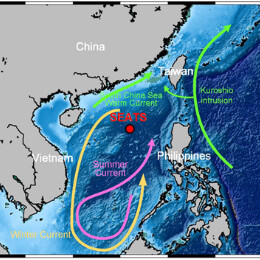
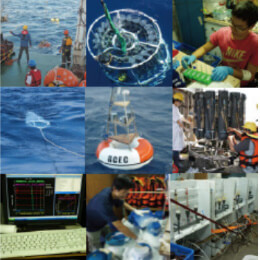
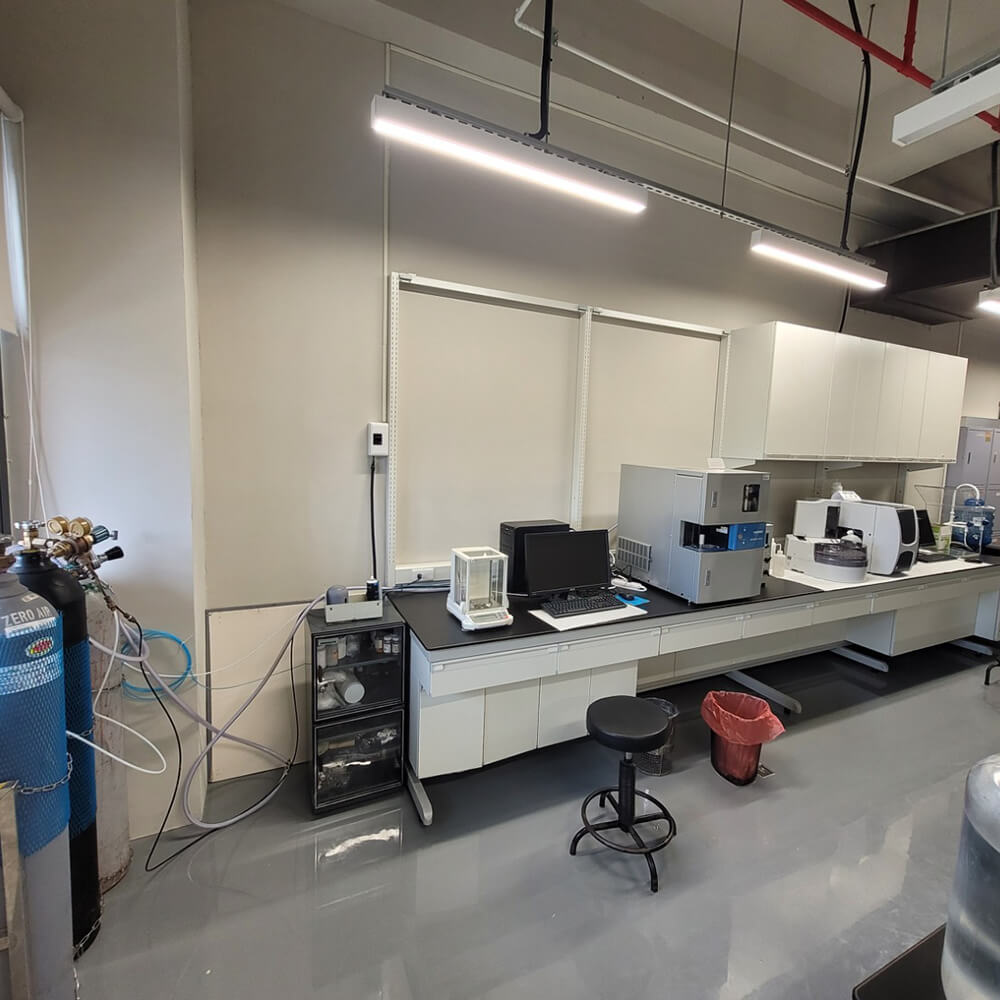

Tai-MOS is a long-term, hypothesis-driven research project focusing on variations in biogeochemical phenomena across different time scales within the upper water column (euphotic zone) of tropical oligotrophic oceans. The project conducts regular research cruises aboard the R/V Legend to the South-East Asia Time-series Station (SEATS; 18°N, 116°E). Following international protocols, the research team collects and analyzes samples at the Core Laboratory to measure key parameters. The resulting long-term time-series data are archived in the NSTC Ocean Data Bank, providing the academic community with an essential resource for studying long-term changes in the marine environment. To foster collaboration, available spots on these cruises are open to applicants from the wider oceanography community.
Tai-MOS serves four primary functions:
Starting in the second year, Tai-MOS accepts applications for Branch Projects. The process begins with a public call for proposals issued to the academic community. Interested universities and research institutions are invited to submit a 1–2 page brief outlining long-term observational research on unique ecological systems or key marine science issues. The Headquarters Project assembles a Project Review Committee of domestic experts to evaluate presentations from applicants. Selected candidates will then submit formal project proposals, which require final approval from the Scientific Steering Committee to become official Tai-MOS Branch Projects.
Scientific Steering Committee (SSC): A standing committee composed of the discipline convener and review committee members. The SSC is responsible for supervising and advising on all operations executed by the General Project Office. Members serve a three-year term and are eligible for reappointment.
Project Review Committee (PRC): A specialized, task-driven committee that manages the preliminary evaluation of branch projects, including prospectus reviews and public briefings.
The memberships of these two committees may partially overlap but must remain distinct. Additionally, all proposals must comply with standard NSTC research grant formatting.
aunched in 2017, the R/V Legend is owned by the NSTC and operated by the Taiwan Ocean Research Institute (TORI). The vessel measures 76 meters long by 16 meters wide, features a gross tonnage of 2,629 tons, and reaches speeds up to 12 knots. Built for extended missions, it can spend up to 30 days at sea with a full complement of 43 people (19 crew and 24 researchers). For more information:
“Marine Time-series Research” refers to continuous, long-term investigations conducted at a specific location for at least ten years to track variations in marine phenomena across seasonal, interannual, and even centennial time scales. As part of the Joint Global Ocean Flux Study (JGOFS) time-series network, the South-East Asia Time-series Study (SEATS) was launched in 1997 by the National Center for Ocean Research (NCOR), with funding from the National Science and Technology Council (NSTC).
This multidisciplinary, multi-institutional project aims to directly observe variations in the marine carbon cycle and other biologically driven processes over interannual to decadal time scales. The SEATS station is situated in the deep waters (>3,800 meters) of the central-northern South China Sea (18°N, 166°E). It remains unique as the only international marine time-series site located within both a tropical region and a marginal sea.
Characterized by its unique ecology, SEATS features oligotrophic waters isolated from major Southeast Asian river runoff, persistently high sea surface temperatures with minimal seasonal variation, and strong water column stratification. Additionally, the site is defined by a shallow mixed layer and nutricline, a deep euphotic zone, distinct monsoon seasons, frequent typhoons, and high atmospheric aerosol deposition.
The South East Asian Time-series Study (SEATS) and the biogeochemistry of the South China Sea—An overview.
Temporal variations in the carbonate system in the upper layer at the SEATS station.
Effects of Mixed Layer Depth on Phytoplankton Biomass in a Tropical Marginal Ocean: A Multiple Timescale Analysis.
Comparison of primary Production Using in situ and Satellite-Derived Values at the SEATS Station in the South China Sea.
Diel to Seasonal Variation of Picoplankton in the Tropical South China Sea.
Viral Shunt in tropical oligotrophic ocean.
The Core Laboratory manages a broad spectrum of responsibilities, which are categorized into two operational tiers, Management and Execution.
The Management tier is overseen by three to four staff researchers. This team comprises a Principal Investigator (PI) who directs overall operations, one Scientist, and two Postdoctoral Researchers. Their specific responsibilities include:
Beyond their operational duties, the Scientist and Postdoctoral roles serve as a career springboard, providing a professional buffer zone for researchers aspiring to pursue long-term careers in marine science.
At the Execution tier, technicians and research assistants focus primarily on data acquisition, processing, quality control, analysis, and archiving. To maintain rigorous data standards, the lead personnel (typically a senior assistant) must be highly proficient with sampling instruments—including CTD sensors, water samplers, and sediment traps. They must also be experts in measurement protocols for key environmental parameters (such as dissolved oxygen, salinity, and nutrients) and skilled in computerized data processing.
The three most critical responsibilities at this level are:
Table 1: Marine Biogeochemical Core Parameters for Time-Series Research Defined by the International JGOFS.
| 編號 Number | 核心參數 Parameters |
|---|---|
| 1 | CTD and Related Measurements |
| 2 | Salinity Determination |
| 3 | Dissolved Oxygen by the Winkler Procedure/Shibala method |
| 4 | Total Inorganic Carbon by the Coulometeric Procedure |
| 5 | Nitrite, Nitrate +Nitrite, Phosphate and Reactive Silicate by continuous Flow Analysis |
| 6 | Measurement of Chlorophyll-a and Phaeopigments by Fluorometric Analysis |
| 7 | Particulate Organic Carbon and Particulate Nitrogen |
| 8 | Dissolved Organic Carbon by High Temperature Combustion/Direct Injection Technique |
| 9 | JGOFS Sediment Trap Methods |
| 10 | New Production by 15N-method |
| 11 | Viruses and pico-plankton abundance by Flow Cytometry |
| 12 | Primary Production by 14C-method |
| 13 | Bacterial Production using Methyltritiated Thymidine |
| 14 | Community Respiration by DO dark incubation method |
| 15 | Microzooplankton Biomass |
| 16 | Microzooplankton Herbivory |
Table 2: Core Laboratory Instruments and Equipment Provided by RCEC, Academia Sinica.
| No. | Equipment | Brand | Model | Amount | Measurement Items |
|---|---|---|---|---|---|
| 1 | Flow Cytometer | Thermo-Sci | Attune Nxt | 1,800,000 | Microzooplankton Biomass |
| 2 | Liquid Scintillation Counter | PerkinElmer | Tri-Carb 4810TR | 2,550,000 | BP、PP |
| 3 | Fluorescence Microscope | Carl Zeiss | Axio Scope, A1 | 650,000 | Bacteria Biomass |
| 4 | Spectrophotometer | Shishin Tech. | SP8001、SP830 | 300,000 | Nutrients、DO |
| 5 | Multi-channel Peristaltic Pump | Ismatec | IPC-8 | 100,000 | Nutrients |
| 6 | Fluorometer | Turner Designs | Trilogy | 300,000 | Chlorophyll-a |
| 7 | High-Speed Refrigerated Centrifuge | Eppendorf | Centrifuge 5810R | 400,000 | Chlorophyll-a、BP |
| 8 | Vacuum Filtration System | Chrom Tech | DP-02 | 25,000 | POC、DOC |
| 9 | Microbalance | Mettler Toledo | XP2U | 800,000 | TSM |
| 10 | Balance | Mettler Toledo | ML4002 | 100,000 | Preparation |
| 11 | CS Analyzer | Horiba | EMIA Pro | 1,600,000 | POC |
| 12 | TOC Analyzer | Shimadzu | TOC-LCPH | 1,500,000 | DOC |
| 13 | Ultrapure Water System | Milli-Q | IQ-7000+Ess 10 | 1,200,000 | Lab Water |
| 14 | Autoclave | Tomin | TM-325 | 40,000 | Preparation |
| 15 | Muffle Furnace | Deng Yng | DF303 | 70,000 | POC、DOC |
| 16 | Hot Air Oven | Deng Yng | DO45 | 35,000 | Preparation |
| 17 | Incubator | Deagle | LTI-600 | 40,000 | Thermostatic Cultivation |
| 18 | Ultrasonic Bath | Delta | DC-600H | 40,000 | Chlorophyll-a |
| 19 | Water Bath | Firstek | B402-L | 70,000 | Thermostatic Cultivation |
| 20 | Bench pH Meter | Horiba | F-54BW | 20,000 | Water Quality Analysis |
| 21 | 4oC refrigerator | Ruey Shing | RS-S3002F | 50,000 | Sample preservation |
| 22 | -20oC freezer | Ruey Shing | RS-S3007F | 75,000 | Sample preservation |
| 23 | -80oC freezer | Nuaire | NU-6382G | 400,000 | Sample preservation |
In 1987, the National Science and Technology Council (NSTC) commissioned the Institute of Oceanography at National Taiwan University to establish and operate the “Hydrological Database” as a funded project, which was later renamed the Ocean Data Bank (ODB). Currently, the ODB archives and consolidates oceanographic cruise data from various domestic research vessels, including the New Ocean Researcher 1, 2, and 3; Ocean Researcher I, II, and III; Fishery Researcher 1 (partial datasets); and Ocean Researcher V (data from its first two years of operation). The database has also progressively integrated observation data from various marine mooring systems.
Data application and acquisition procedures are conducted in accordance with the ODB’s existing regulations and protocols. For further details, please visit the official website at https://www.odb.ntu.edu.tw/. Tai-MOS core scientists, postdoctoral researchers, and cruise-participating research teams are exempt from the standard two-year data moratorium. Upon approval by the Scientific Steering Committee, they will have priority access to the latest cruise datasets collected within the past two years.
Continue the legacy of the SEATS project, this project designates the SEATS deep-water station in the northern South China Sea (18 oN; 116 oE) as the primary baseline station for the Tai-MOS Core Project. The program conducts four seasonal research cruises each year, including two cruises scheduled and funded directly by this project, and two cruises coordinated through existing sediment trap cruises operated by TORI. Each cruise has a duration of 10–12 days. To capture high-frequency biogeochemical dynamics within the water column, this project employs high-frequency, fixed-point sampling operations. This involves sampling the upper water column every 3 hours over a 24-to-36-hour period while on station. This intensive sampling design emphasizes the significance of short-term, rapid biogeochemical processes. To apply for cruise participation, please complete the “SEATS Cruise Application Form” and submit it to the Tai-MOS Core Project Office coordinator by the end of April each year.